
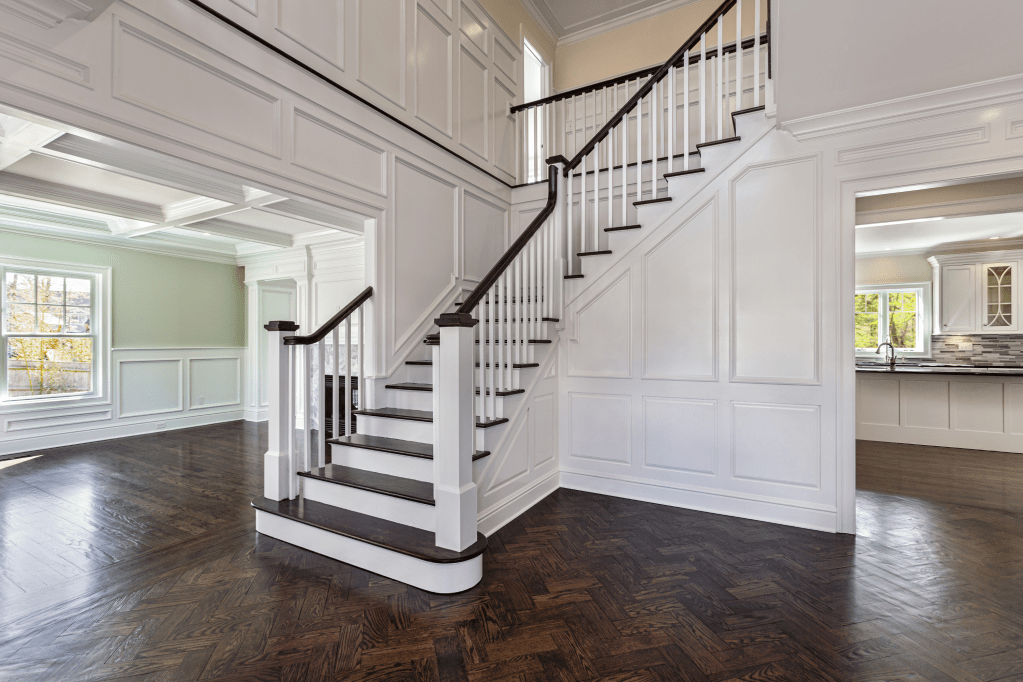
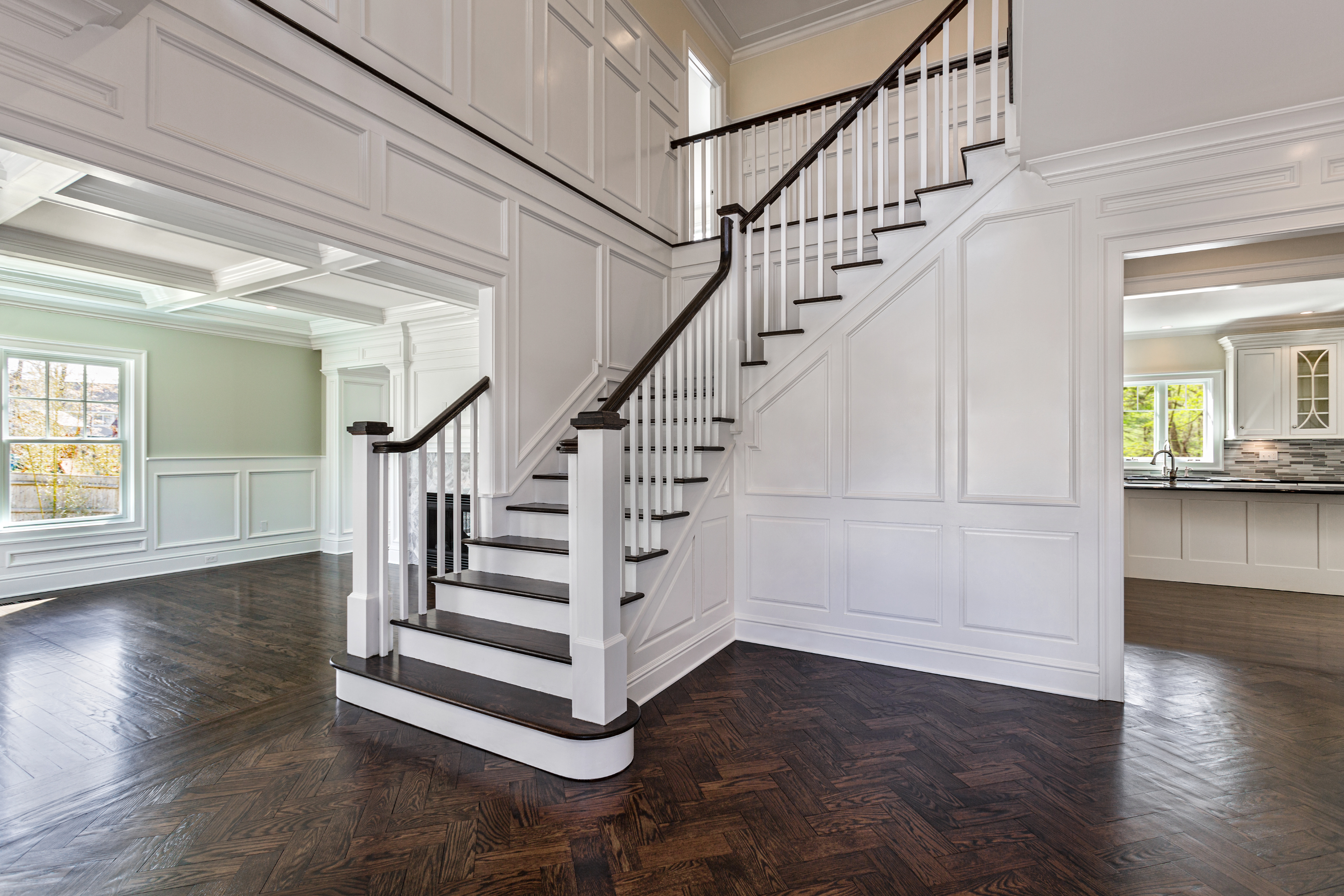
New homes are far easier to get than existing homes right now because builders are still building while existing homeowners are staying put.
That’s because from 2012 to 2019, 30-year fixed rate mortgages hovered around 4-5%, but then dropped below 3% during the pandemic. Then the FED raised rates at super speed in an attempt to curb inflation.
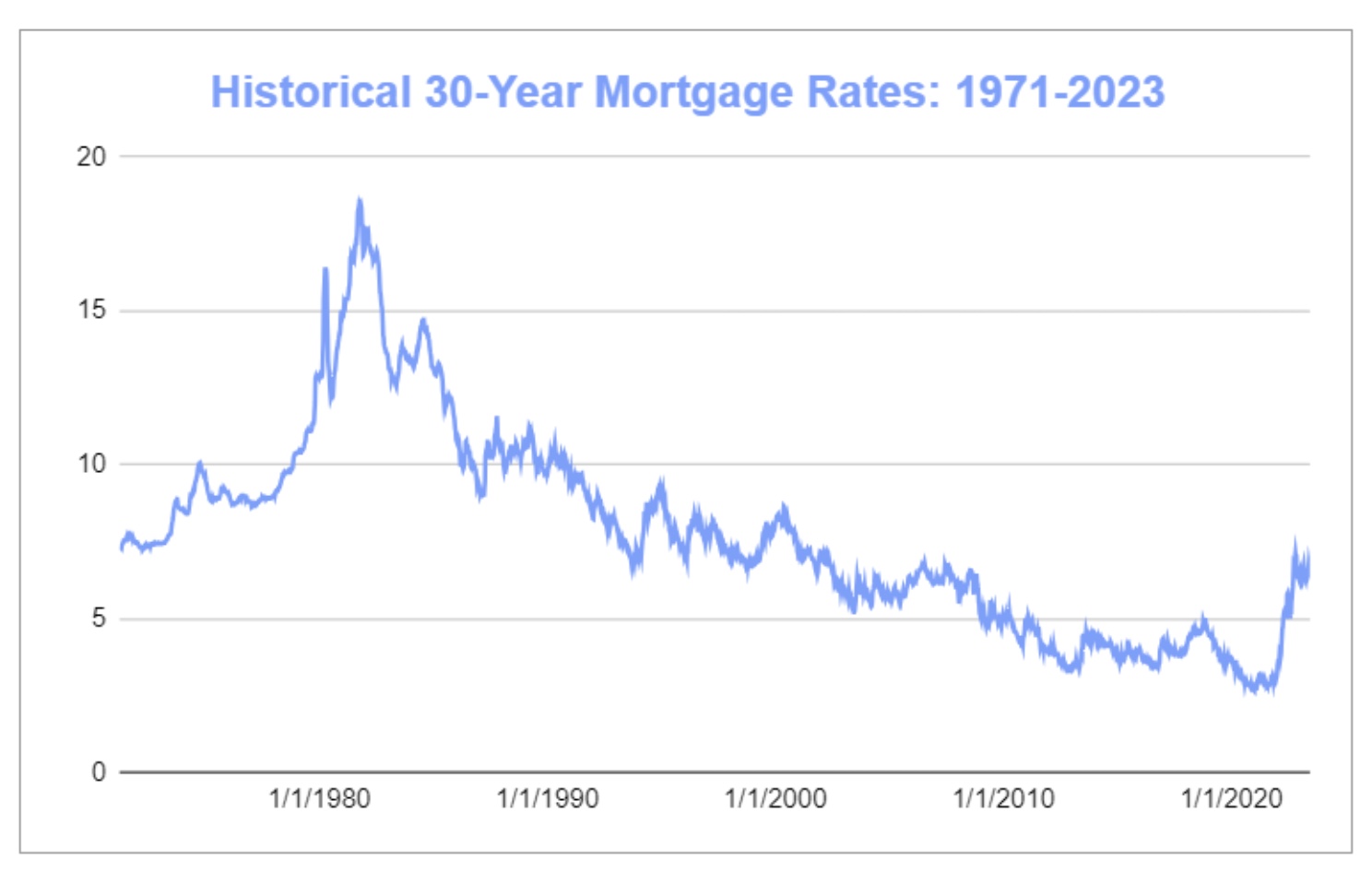
With interest rates now around 7%, existing homeowners are not too keen to sell their houses with 3% mortgages. This is called the “lock-in effect”.
For those who don’t track the housing market or understand just how impactful interest rates are, here’s a simple example of why this matters:
Just one year ago, the average house price in 2022 was $350,000 and the average mortgage interest rate was 3%. That works out to a monthly P&I mortgage payment of $1,464 per month (assuming a 20% down payment of $70,000).
That same $350,000 house today but with a 7% mortgage interest rate works out to a monthly mortgage payment of $2,146.
So, if you changed nothing besides the interest rate of your loan, you’re paying an additional $682 per month. And if you sell your house today and move to an identically priced house, your payment will go up a lot. No wonder it’s called the lock-in effect.
Here’s a great chart from Redfin showing average payments relative to asking prices over the past 4 weird years:

This is why no one wants to sell their homes. A record amount of homeowners either refinanced to a 3% mortgage over the past couple years or bought a house at that rate if they were a first-time buyer.
Now, the only way for many first-time buyers to purchase a home is to buy a brand new one from a builder.
I wrote about how to make the decision to buy new or look for an existing home in a previous post here, but it may not matter if you only have the one option these days:
Should You Build a New House or Buy Used?
Someone offered 10% over asking price. Another family offered all cash. The old guy from the Monopoly game offered Park Place, Boardwalk, and all 4 railroads for it. You were outbid before the sun set.
What now? (4 min read)
If that’s the situation you’re in, it pays to know what to look for when you do the final walk-through inspection of your new house with the builder.
The builder will confirm everything was built to spec and to code with you and then ask for your final sign off. They may also include a one year warranty.
If you’re willing to spend the money to hire a third party inspector to join you, it could be worth it.
Absent bringing your own inspector, the best thing you can do is come prepared to your walk-through with a long checklist. You just spent hundreds of thousands of dollars to purchase your home. Now is the time to be a “Karen”.
It may be uncomfortable to ask for something small to be fixed, but builders won’t hesitate to perform shoddy work, do quick inspections, and be on their way once they’ve got your check in their hand.
Sometimes it’s not even something they notice. They use sub contractors who all have varying degrees of quality in their work.
Aside from confirming they built the right floor plan, painted the walls the right color, and installed the agreed-upon appliances, you’ll want to get ultra-detailed on your review of their work. If you don’t, you’ll end up needing to repair it later on your own.
In general, they’ll ask you to note any spots that need to be repainted. That’s fine but it’s a simple fix for them and not what this article is about. Don’t focus on the paint.
Focus on these things instead:
What Should You Check in Your New Construction House?
Here’s my list of 15 overlooked new house issues that can be hiding in plain sight:
- Carry your signed house specifications and plans around with you. Confirm what you bought is what they built. Countertops are the right depth and color. Fixtures are the ones you expect. If something isn’t right, ensure they mark it down to correct.
- Ensure the sump pump works and the lid can be removed so you can access the pit. The last thing you want to do is take their word for it only to have the sump pump go out during a thunderstorm when your basement is flooding and you can’t access it.
- Check that toilets are securely fastened to the floor and caulked around the base. Take both hands and gently try to rock the toilet back and forth. It shouldn’t move. Flush it to ensure it refills properly.
- Wiggle every doorknob and cabinet pull you can find. Loose hinges or doorknobs need to be tightened up.
- Check that door hinges are attached the right way. I wish this were a joke, but check each door frame where it attaches to the frame with hinges. Sometimes builders will have a left hand opening door hanging around and try to install it for a right hand opening door and put it in a back bedroom or closet where you won’t notice. It will be obvious if you look at the hinges attached to the door.
- Make sure every door closes and locks. Try to push it open without turning the handle once you’ve closed it. Houses are complicated and settle quickly with all that new weight and loose dirt. Sometimes a door can become misaligned.
- Cabinets are flush and level and cabinet doors are level with each other.
- Light switches all work and outlets are installed in the right direction. Sometimes an electrician will install something upside down or backwards in a hurry.
- Look for oil stains on the driveway or garage. Brand new concrete should look brand new. They will try to tell you all concrete cracks and settles, but not likely if it had proper compaction tests and pouring conditions.
- Confirm all appliances work. Run the AC even if it’s winter. Run the furnace even if it’s Spring. Confirm a furnace air filter is installed. Turn on the stove. Run the microwave if it comes with one built in.
- Look for small window pane cracks or chips.
- Check for water damage around windows. Builders and contractors can be lazy or have poor memory. They’ll be working on a room with the window open only to go home for the night and forget to close it. If it rains, water damage may be evident on the walls or carpet near the windows if you look close enough.
- Insulation is in place correctly in the attic. You should not be able to see any daylight or large gaps of missing insulation in the attic or where the basement ceiling meets the basement walls.
- Exterior vents and exterior pipes are sealed to the siding or brick. If it looks like water can get in, it probably can.
- Before you do your walk-through, try to catch a neighbor outside and chat with them. Chances are good they moved in somewhat recently and you can ask them about their experience. If they had any specific issues, this may give you some good ideas about items to double check.
The best time to note an issue is while you’re doing the walk-through inspection, not after it. Make sure they document it on a final inspection sheet and don’t sign it until you’re confident all issues are correctly stated. Then take a picture of the list and take thorough pictures of every issue.
It’s only natural that the excitement of walking through your new home may cloud your judgement and make you less observant while you’re marveling at the shiny new materials, but keeping a critical eye towards the smaller details will go a long way.
The builder may also notice that you are prepared and won’t try to pull a fast one on you.
This is likely the most expensive purchase you will ever make in your life; get your money’s worth.
If you want to understand more about the drivers of this current housing market, check out my recent post 10 Charts That Explain this Weird Housing Market and What First-Time Buyers Can Do About It.
You can also subscribe below to be notified of new articles on the first of each month.
More Reading:
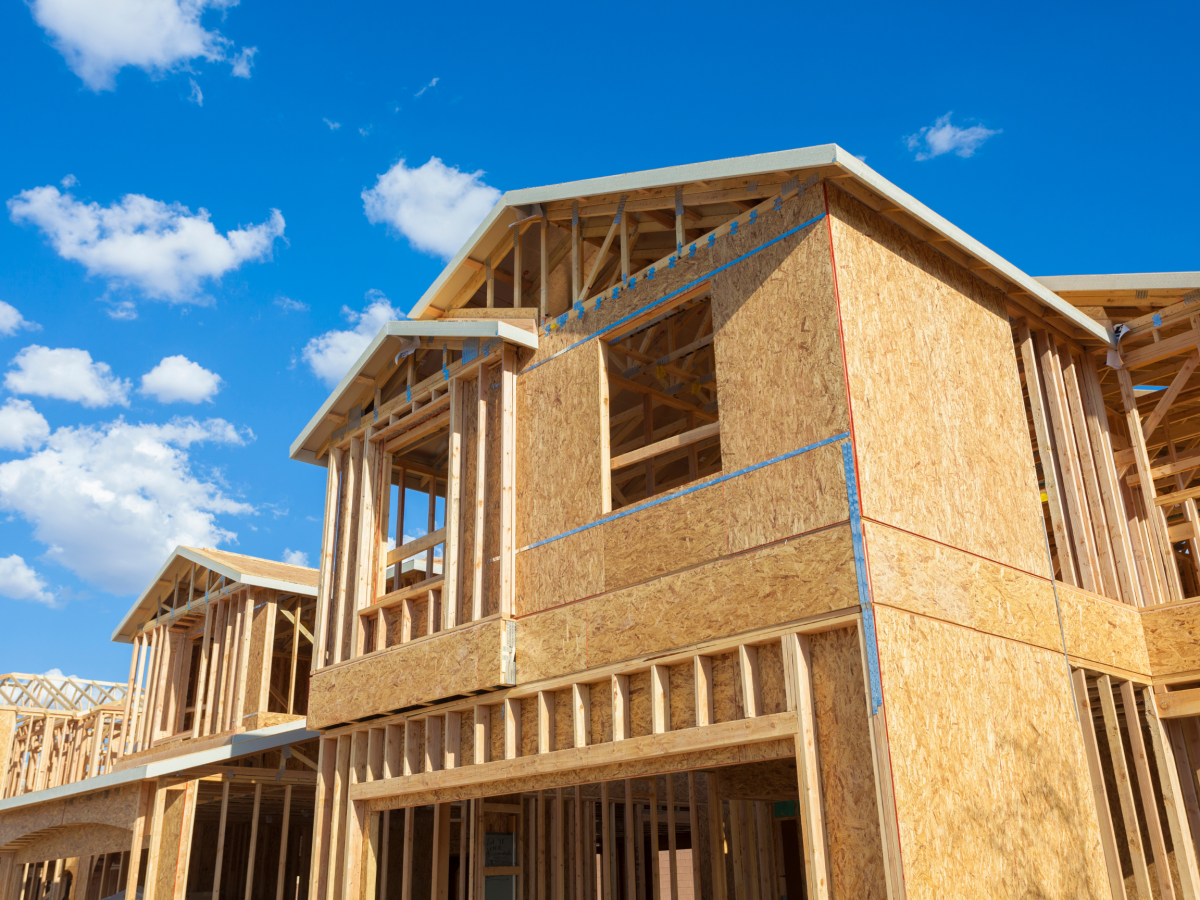
15 Questions to Ask When Buying a New Construction House
Consider the answers to these questions when deciding on a new home builder or a new construction house. (4 min read)
Why Invest in Real Estate? (Beyond Conventional Wisdom)
Unlike owning stocks, cash, or retirement accounts, real estate is real place you can touch and feel. You live there. You raise kids there. You spill coffee there. It’s home.
And you can’t spill coffee on an NFT. (4 min read)

Are We in a Housing Bubble?
Although housing prices have risen quickly over the past couple years, and are now out of reach for many first-time home buyers, to call it a bubble would be to call it unsustainable, irrational, and driven by euphoria or greed.
No one asked, but that didn’t stop me from giving my housing market predictions.…





 Poor. Choices.
You must be logged in to post a comment.